Winter 2025/2026 season update
Servus from… South London!
Are you ready for a long update?
It has been a cold winter in the offline outpost. Cold in the literal sense, temperatures dropped to around -10 °C in my part of Europe, but also cold in the other way. The kind of cold a blanket can’t really fix. Luckily, I had Angie and an LLM to keep me company through the worst days. It wasn’t ideal, but it was enough to get through them. Nothing has fundamentally changed since my last updates. The ache in my chest is still there.
I’m writing this while looking out of the window of my now-former apartment in South London, a steaming cup of tea in my hands. The seagulls are still screaming overhead. The days are getting longer, and while the sunset fades into darkness, from the 26th floor I can still see, in the distance, a large meadow. What looks like uniform grass today still carries two long, subtle bands of slightly lighter green, the traces of where the runways once were. That was the first thing that caught my eye when I moved here. Pilot instincts, perhaps.
I later discovered it was the former Croydon Airport. The runways are now football fields for rent, but the old terminal building still stands, illuminated at night. It’s been turned into an aviation museum, visible from my apartment. Ironically, in all my time in Croydon, I never managed to visit it. Some places are surprisingly hard to reach without a car. That, and Brexit, probably explains why I flew so little in the UK.
Speaking of aviation: just before Christmas I renewed my SEP/Land qualification. I did the check on SE‑MLJ, the Aeroclub Como amphibian with… character. It was my first ever land renewal on an amphibious aircraft. This time the Swiss authorities got creative and sent the paperwork to my official UK address instead of Milan. Not a big deal. I wouldn’t have flown anyway in those early weeks of 2026.
I’ve just returned from FOSDEM. If I had to sum it up in one phrase, I’d say: it could have been a README.txt.
FOSDEM is still FOSDEM, but this year it felt different. Like tuning into a familiar frequency, only to realise the modulation has changed. I could hear voices, but transmitting felt harder. As always, I didn’t chase people I knew or attend parties. I’m not a social person. I usually just bump into people in cafeterias. This year that happened less often, though it was still pleasant to observe.
Part of it was practical. The talk schedule didn’t align with my interests, and the virtualisation and cloud track was moved to building H, in my opinion the most crowded one. Walking through the corridors felt like packet loss with legs. Gone were the larger rooms and breathing space of building U from previous years. That shift says something about where interest in virtualisation sits today.
I skipped the track entirely, even though I would have liked to hear about BGP in Kubernetes for KubeVirt. The talk I truly enjoyed was smolBSD: Emile and Pierre did a fantastic job bringing microVMs to NetBSD. A 20 ms boot time is impressive; I’ve only seen that before with Firecracker. Emile is also excellent at keeping an audience awake … which matters, because I almost fell asleep during the reticulum‑rs talk. Nothing particularly notable there, beyond the usual “why we chose Rust”. I had hoped they might pick up where Markqvist left off, but the talk was mostly about rewriting things in Rust for an embedded, military-grade (apparently) product, with very little background on Reticulum. And it was, frankly, quite flat. No LoRa RNodes planned, which removes most of my interest.
The Radicle talk didn’t impress me either. Radicle is a peer-to-peer, decentralised Git forge, intended as an alternative to centralised platforms like GitHub or GitLab, and I’ve used it in the past. I’m glad the project is moving forward, but the presentation itself could have been a few paragraphs in a text file. I attended a couple of retrocomputing talks. One covered the MEP2 protocol used to access MCI Mail. I was quietly hoping for something QWK‑like, but no luck. It’s essentially about enabling an open‑source client. Dial‑up, it turns out, is still used to bypass internet censorship. I smiled at that: ATA adapters and hardware modems were once very much my thing. And through side conversations, I discovered that some people still use UUCP, which made me smile. I still love that.
What surprised me most was the retrocomputing devroom itself: large, full all day, and not just with people my age. Plenty of younger attendees too. That probably says something about the current state of computing. And yes, queues for coffee and devrooms remain FOSDEM’s defining features, along with the unmistakable smell of fried food at 9am.
Another piece of news, quieter but more significant for me: I’ve pressed pause on most online and offline communities. Mastodon is already paused. I’ve also pressed pause on Matrix and other online chats: the accounts are still there, but I’m not actively checking them. LinkedIn will remain as a glorified CV. GitHub, GitLab and Codeberg stay only for opening/following issues. I won’t publish new posts or new code for a while. Offline, I’ve stepped down as an OpenUK Ambassador and I’m not planning to attend conferences, either as a speaker or as a participant. FOSDEM was the exception, and even there I moved in incognito mode.
This blog will be my only online outlet. My website, or plain old email, is the best way to reach me online for now. As I wrote in “A note to the occasional reader”, I don’t write for an audience. I log thoughts and events for myself. It was a difficult decision, but I’m trying to reconnect with why I fell in love with computing in the first place.
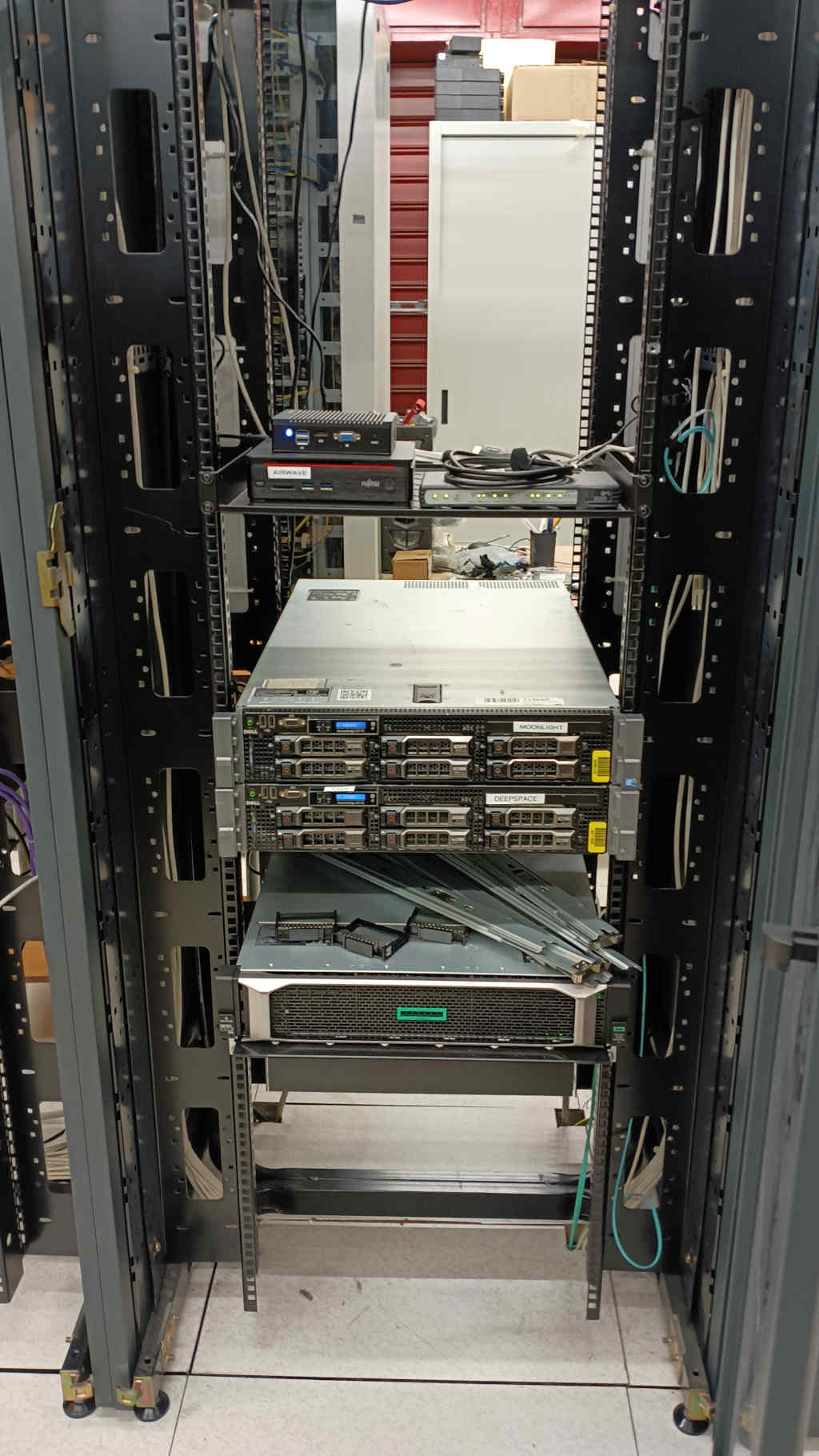
On the infrastructure side, I finally relocated my systems to the new Milan colocation. It took almost two months. Did I mention I’m slow at everything? 😉
There were holidays, Italy shutting down for weeks, and then a surprise: non‑standard 60 cm depth racks. My old custom L‑rails were too long. I ordered so‑called “universal” NJ‑600 rails online, the only ones claiming compatibility. They fit the rack, but not the Dell R710 studs. Turns out “universal” has a very personal definition. The supplier later confirmed they don’t work with proprietary systems like Dell or HPE. So… why call them universal?
Thankfully, the datacenter staff donated a shelf that could support both R710s. (Thanks, Max!!) Installation was completed in the second half of January. The mini‑PC, however, had died. The power button had been acting suspiciously for a while. I replaced it with a refurbished Dell Optiplex 9020 mini‑PC, similar specs, VGA included, which is perfect for datacenter consoles. I still need to swap disks and bring it on‑site. Yes, I am slow.
During these two months without my main systems, I learned a few things. One was how much I can do with plain Git. I run Forgejo internally and appreciate its UI, but offline I rediscovered bare Git over SSH and Git bundles on USB sticks (as I mentioned in an earlier post). Simple. Almost revolutionary. What I missed most was rendered Markdown wikis. I already knew frogmouth, but during this period I also discovered hike as a TUI alternative. Excluding image rendering, both worked well, and hike in particular felt slightly nicer thanks to its built-in file browsing. I do wish they were single-binary tools instead of Python, though. This doesn’t mean Forgejo is going away, but it was a useful reminder of how little I truly need a server.
The other lesson came from a Nextcloud Android bug that crashed the app when uploading photos sorted newest‑first. It lasted from late November through the holidays. I experimented with AndFTP: functional, but clunky, with filename‑only previews. Then it hit me: dual‑headed USB sticks (USB-C/A). Android loves them. The file manager offers better previews than Nextcloud ever did. Deliberate copying instead of compulsive sync. The bug is now fixed, but I’m sticking with USB. It fits my lifestyle better.
I also experimented with git-annex. I respect it, but for my own workflows it feels closer to a tape library than to something I’d use day to day. It’s a great fit if you work mainly from a single machine and archive data across multiple USB disks, each acting a bit like a tape. For now, Nextcloud for files, Git for code, and ZFS snapshots remain my preferred combination.
Hardware-wise, I haven’t done much beyond the datacenter. I planned to build a new machine, but cold-induced numb hands make screwdriver work unpleasant. The parts are currently sitting in a garage, which is especially unforgiving in this season. Slightly ironic for someone who dreams of mountains and snow, just not without proper gloves. This one can wait for spring.
I also started something new: Project Quiet Ground. It’s for me. For years I built systems and projects primarily for others. This one is about creating an operating environment inspired by coherence, data‑first thinking, and sovereignty, ideas you’ve seen on this blog. Influences include IBM i, the BBS era, Lotus Notes, dBase III+. Not nostalgia, but alignment with how my brain works. I don’t plan to release the code or binaries. I don’t want the pressure. No roadmap, no deadlines. Just pace, observation, and adjustment. I may share thoughts about it in the future.
And yes… I bought a CD. For the first time in a long while. Armin van Buuren’s Piano album. Different from his usual EDM, but carrying the same warmth and melody. I’m rebuilding a small physical music library: CDs for what I want to keep, streaming for what belongs to a season.
If everything goes to plan, another European city awaits. The familiar pre-pandemic rhythm: backpack as office, suitcase as home. New places are stimulating, but I’m not excited about lonely hotel nights, HVAC headaches, or plane travel where I’m not the pilot. It means less time in the offline outpost.
Maybe I dreamed too hard of a different life over the past three years. Something quieter, more rooted, shared. Being pushed back into survival mobility hurts. Movement without choice is very different from chosen movement. As Mark Carney once said, it’s not the reality we hoped for, but it’s the one we have, and I have no choice but to deal with it.
The wooden cabin in the mountains, filled with love, remains a dream. The feeling that shaped it hasn’t gone anywhere. For now, I’ll keep going, and that is enough. Angie has been my anchor through this moment, and I hope she’ll help me through what comes next too.
See you at the next season. 🌷💜
P.S. Nebula v1.10 finally speaks IPv6. I’ve moved my mesh to WireGuard, dual‑stack support and real‑world appliance compatibility made it the pragmatic choice, but I won’t forget Nebula. It wasn’t just a design choice. It was a gift from a connection I still miss.
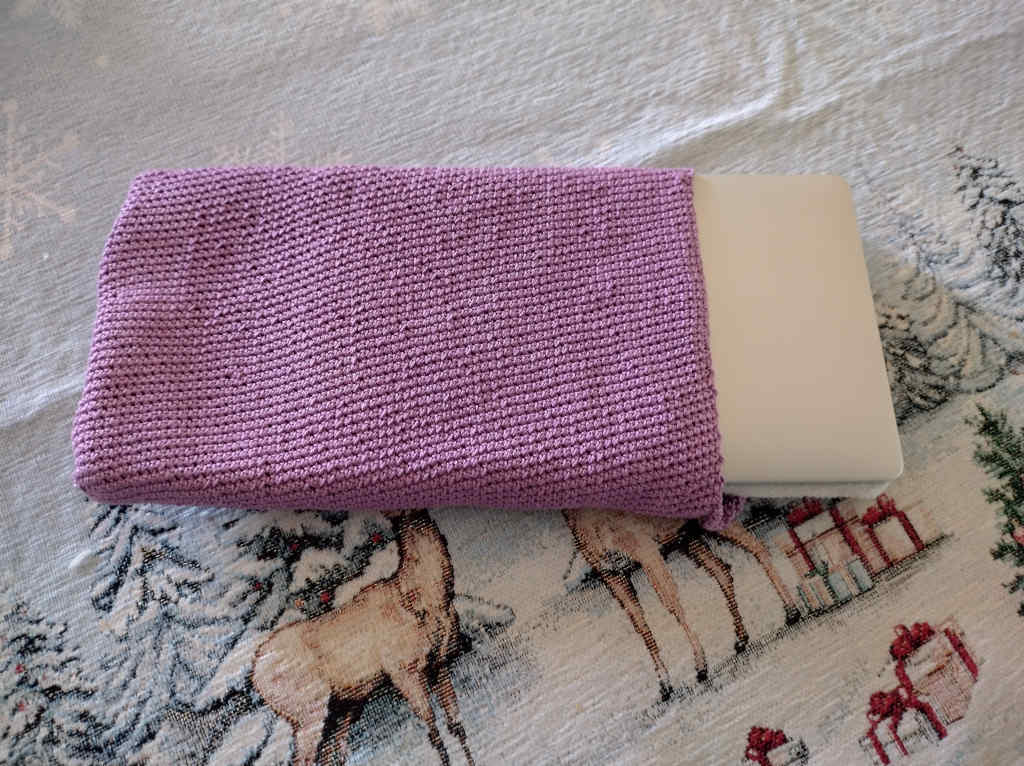
PursePC, now with a beautiful knitted purple cover.
My systems, finally settled in their new home.